
incubating commercial production and marketing of organic indigenous rice within the weto landscape

incubating commercial production and marketing of organic indigenous rice within the weto landscape
- Project Cost: $98, 710
- Donor: Global Environment Facility SGP, Ghana
Project Period
The project was successfully implemented over a 24-month period, from November 2019 to November 2021.
Overview
The Weto local brown rice is a unique upland variety that is drought-resistant and can thrive on exhausted land, offering a sustainable solution to soil degradation. This rice is high in nutritional value and is highly recommended by nutritionists, especially for diabetic patients and as a weaning food for children. Due to its distinct taste and health benefits, Weto rice has significant market potential, particularly in urban centers. However, the rice faces several challenges, including lack of certification, poor processing quality, and inadequate storage facilities, which hinder its competitiveness in the market. The project aimed to promote the commercial production and marketing of organic indigenous rice within the Weto landscape, specifically in the Golokwati region of Afadzato South District. It was implemented by the Accelerated Rural Development Organization (ARDO) with funding from the Global Environment Facility (GEF). It sought to increase the productivity of local rice farming, facilitate storage solutions, and introduce modern agricultural techniques to address post-harvest losses.
Project Objectives
The project had the following core objectives:
- Facilitate the purchase and use of a combined rice harvester to improve harvest efficiency.
- Establish rice purchasing agreements to provide financial support to farmers.
- Develop and implement marketing strategies to enhance the competitiveness of local rice.
- Work towards acquiring certification for Weto rice to meet national and international standards.
- Standardize local rice to improve product quality and marketability.
Key Achievements
i. Procurement of Equipment:
A combined rice harvester was successfully purchased and delivered to Golokwati in November 2020. This harvester significantly improved harvesting efficiency, reducing post-harvest losses. Additionally, two youth were trained to operate the harvester, ensuring its effective use on local farms.
ii. Rice Purchasing Agreements:
A rice purchasing agreement was successfully concluded with local rice farmer groups. This agreement allowed farmers to sell their rice at prevailing market prices and offered free storage facilities for unsold rice, alleviating storage concerns.
iii. Marketing Strategies and Standardization:
A workshop on marketing strategies was held to enhance the competitiveness of Weto rice. It was agreed that packaging and branding are essential for attracting consumers. Efforts toward standardization are ongoing, with consultations underway to acquire certification for Weto rice from relevant authorities such as the Ghana Standards Authority.
iv. Community Engagement and Training:
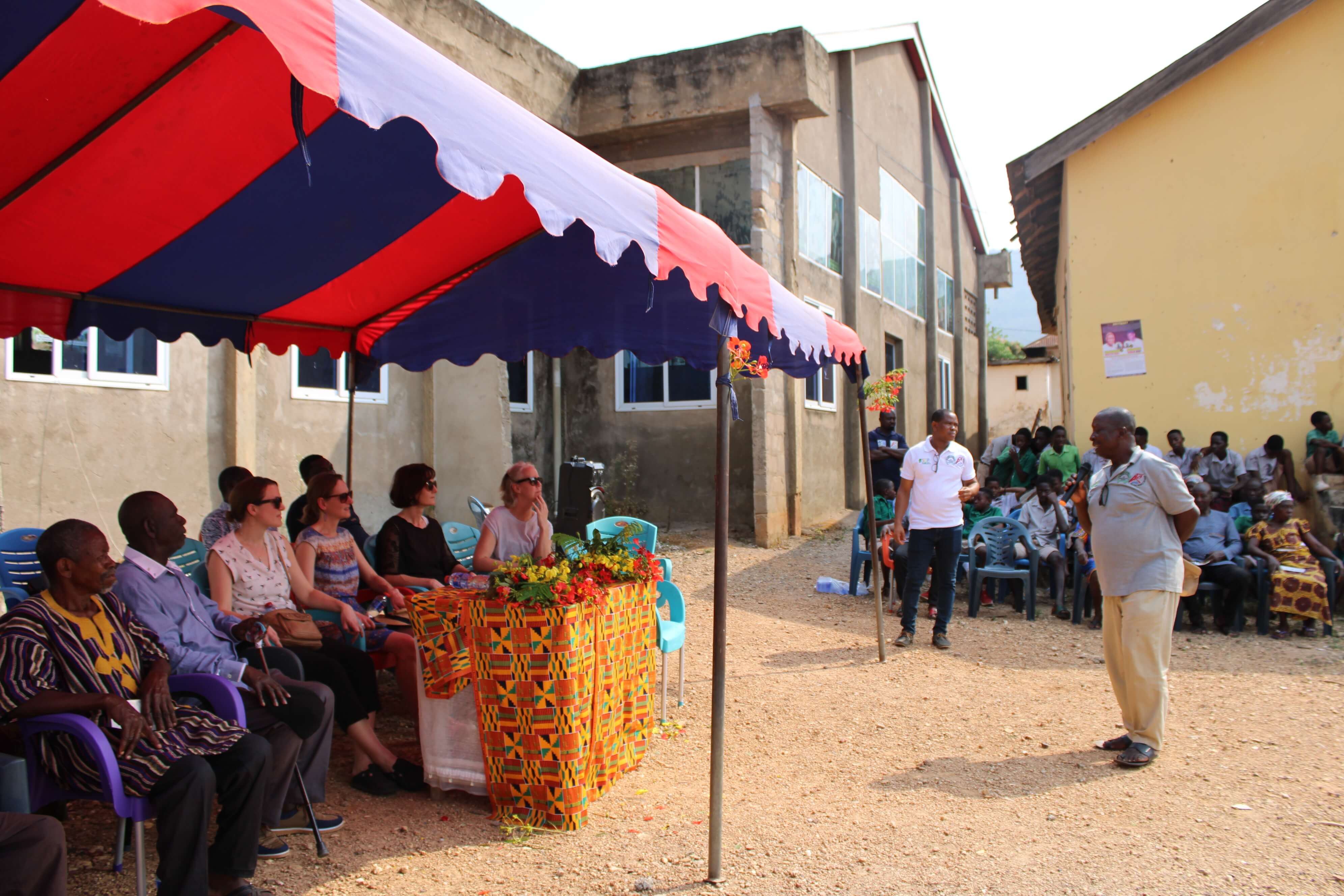
Community engagement activities were conducted across several local communities, including Ve Agome, Deme, Kolenu, and others. A training program on rice value chain addition was organized for women farmer groups, where they learned about grading, packaging, and branding techniques. This training empowered local farmers to improve the quality of their rice and explore alternative uses of rice, such as rice flour.
Lessons Learned
This initiative generated valuable insights that can inform future efforts to strengthen rice value chains and improve smallholder livelihoods. The project demonstrated the critical role of reliable mechanization, particularly the use of combined rice harvesters, in improving efficiency, reducing post-harvest losses and increasing productivity. It also highlighted the importance of effective storage systems, aggregation and market access in helping farmers maximize returns from their production.
The implementation process further revealed the need for stronger quality assurance, certification and standardization systems to enhance product competitiveness and consumer confidence. In addition, the project reaffirmed the value of community-based training and capacity building in promoting the adoption of improved technologies, good agricultural practices and value-added processing. These lessons underscore the importance of integrating technical support, market development and farmer empowerment to achieve sustainable agricultural growth.
Beneficiary Communities
The project benefitted the following communities within the Weto landscape:
- Ve Agome
- Deme
- Kolenu
- Gbodome
- Golokwati
- Wudome
- Tafi Mador
- Agome
- Gbefi Tornu
- Gbogame
- Leklebi Gbi Godenu
- Avega
Photo Highlights


Volunteer With Us Become a Volunteer
Support community development, environmental restoration, and sustainable agriculture initiatives by volunteering with ARDO.
Other Projects
-
 Upscaling the Conservation of Togbe Weto Grove through Alternative Livelihoods Enterprises and Flow of Ecosystem Services along the Landscape
 -
 Transforming the Ecosystem Services Flow through Livelihood Enterprises in the Togo Plateau Range
 -
 Restoring Sacred Groves within the Afadzato South Landscape as Other Effective Area-based Conservation Measure (OECM) for Biodiversity Conservation in the Weto Landscape
 -
 Re-engineering Ecosystem Services and Livelihood Support along the Togo Plateau Portion of Akwapim Togo Range in the Guan District of Ghana
Your contribution helps implement sustainable agriculture, environmental conservation, and livelihood improvement projects.