
Transforming the Ecosystem Services Flow through Livelihood Enterprises in the Togo Plateau Range

Transforming the Ecosystem Services Flow through Livelihood Enterprises in the Togo Plateau Range
- Project Cost: $60, 500
- Donor: Global Environment Facility SGP, Ghana
Project Period
The project was successfully implemented over a 24-month period, from November 2019 to November 2021.
Overview
This project aimed to transform the flow of ecosystem services in the Togo Plateau Range through livelihood enhancement activities. Focused on communities in the Likpe Traditional Area, the initiative sought to improve environmental management practices while supporting local livelihoods. Implemented by ARDO Ghana, the project also received support from the New England Biolabs Foundation (NEBF). The main goals were to restore biodiversity, improve sustainable livelihoods, promote fire prevention and enhance community engagement in environmental conservation.
Project Objectives
The project aimed to:
- Restore biodiversity by replanting native tree species and supporting community-led nurseries.
- Support livelihood improvement through sustainable agriculture practices, including organic farming and dry-season vegetable production.
- Promote fire prevention through the establishment of fire volunteer groups and enhanced community awareness on fire management.
- Empower community members by training local youth in agricultural value chains, including organic farming, marketing, and farm management.
Key Achievements
i. Biodiversity Conservation:
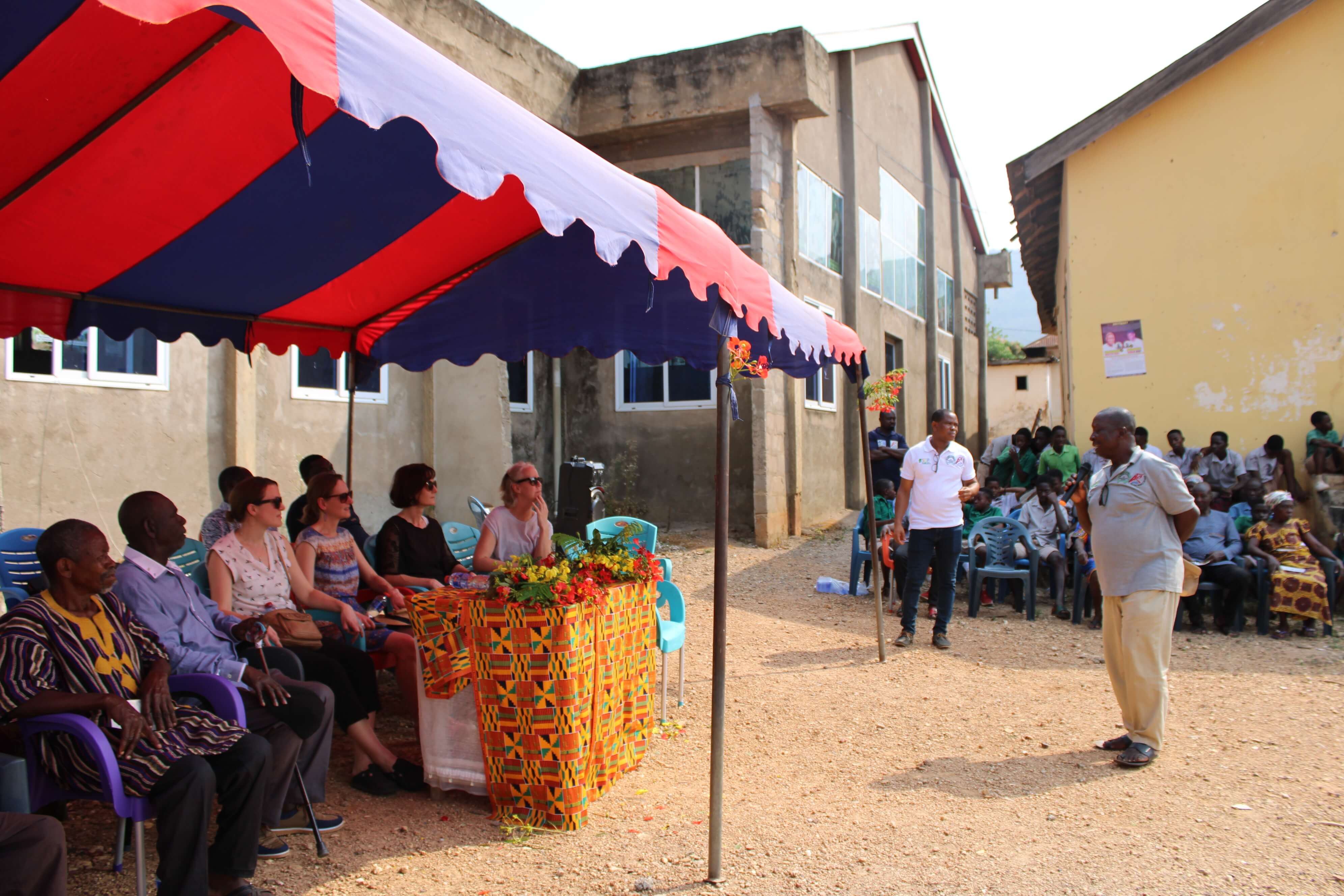
Community forums were organized across various beneficiary communities, such as Likpe Bakua, Mate, and Lolobi Kumasi, to educate residents on the effects of climate change and the importance of biodiversity conservation. A key outcome was the establishment of indigenous tree nurseries along the Wadjakli stream and surrounding areas. The success of these nurseries has contributed to the restoration of vegetation and a reduction in deforestation.
ii. Fire Prevention and Management:
Fire prevention was a central aspect of the project. Two fire volunteer groups were revitalized, leading fire management campaigns and raising awareness in surrounding communities. Since the project began, no fire outbreaks have occurred in the project area, marking a significant success in fire control. Youth engagement in fire prevention efforts has proven essential for the sustainability of this initiative.
iii. Livelihood Enhancement:
The project promoted sustainable farming techniques, including organic vegetable production and multi-cropping. Dry-season irrigation systems were introduced to ensure year-round farming. Additionally, community members were trained in farm management and marketing, with a focus on organic farming practices. Proceeds from these activities have contributed to poverty reduction, particularly among women and youth.
iv. Community Engagement and Sensitization:
Community Environment Management Committees (CEMCs) were established and empowered to ensure sustainability beyond the project’s lifetime. Community members were sensitized on COVID-19 protocols, and Personal Protective Equipment (PPEs) were provided. The committees became self-managing, fostering long-term ownership of environmental conservation activities.
Lessons Learned
This project demonstrated the importance of community ownership in achieving sustainable environmental conservation outcomes. The gradual transition from project-led activities to community-driven initiatives strengthened local commitment and contributed to the long-term sustainability of project interventions.
The project also highlighted the critical role of youth engagement in promoting environmental stewardship and sustainable land management practices. Involving young people in activities such as fire prevention and climate-smart agriculture helped build local capacity and foster a culture of environmental responsibility.
In addition, the initiative underscored the value of integrating livelihood support into conservation efforts. Interventions such as vegetable production and livestock rearing enhanced household incomes, strengthened community resilience and reduced pressure on natural resources, thereby supporting both environmental and socio-economic sustainability.
Beneficiary Communities
- Likpe Bala
- Likpe Bakua
- Mate
- Lolobi Kumasi
- Woadze
- Goviefe
- Kpaler
Photo Highlights


Volunteer With Us Become a Volunteer
Support community development, environmental restoration, and sustainable agriculture initiatives by volunteering with ARDO.
Other Projects
-
 Upscaling the Conservation of Togbe Weto Grove through Alternative Livelihoods Enterprises and Flow of Ecosystem Services along the Landscape
 -
 Transforming the Ecosystem Services Flow through Livelihood Enterprises in the Togo Plateau Range
 -
 Restoring Sacred Groves within the Afadzato South Landscape as Other Effective Area-based Conservation Measure (OECM) for Biodiversity Conservation in the Weto Landscape
 -
 Re-engineering Ecosystem Services and Livelihood Support along the Togo Plateau Portion of Akwapim Togo Range in the Guan District of Ghana
Your contribution helps implement sustainable agriculture, environmental conservation, and livelihood improvement projects.