Project Period: The project spanned from December 2019 to June 2021.
Overview
Weto local brown rice is an upland variety that grows well under dry conditions and can survive on low-fertility soil. The rice has a strong nutritional profile and nutritionists often recommend it for diabetic patients and as a weaning option for children. Its taste and health benefits make it attractive to buyers in major towns.
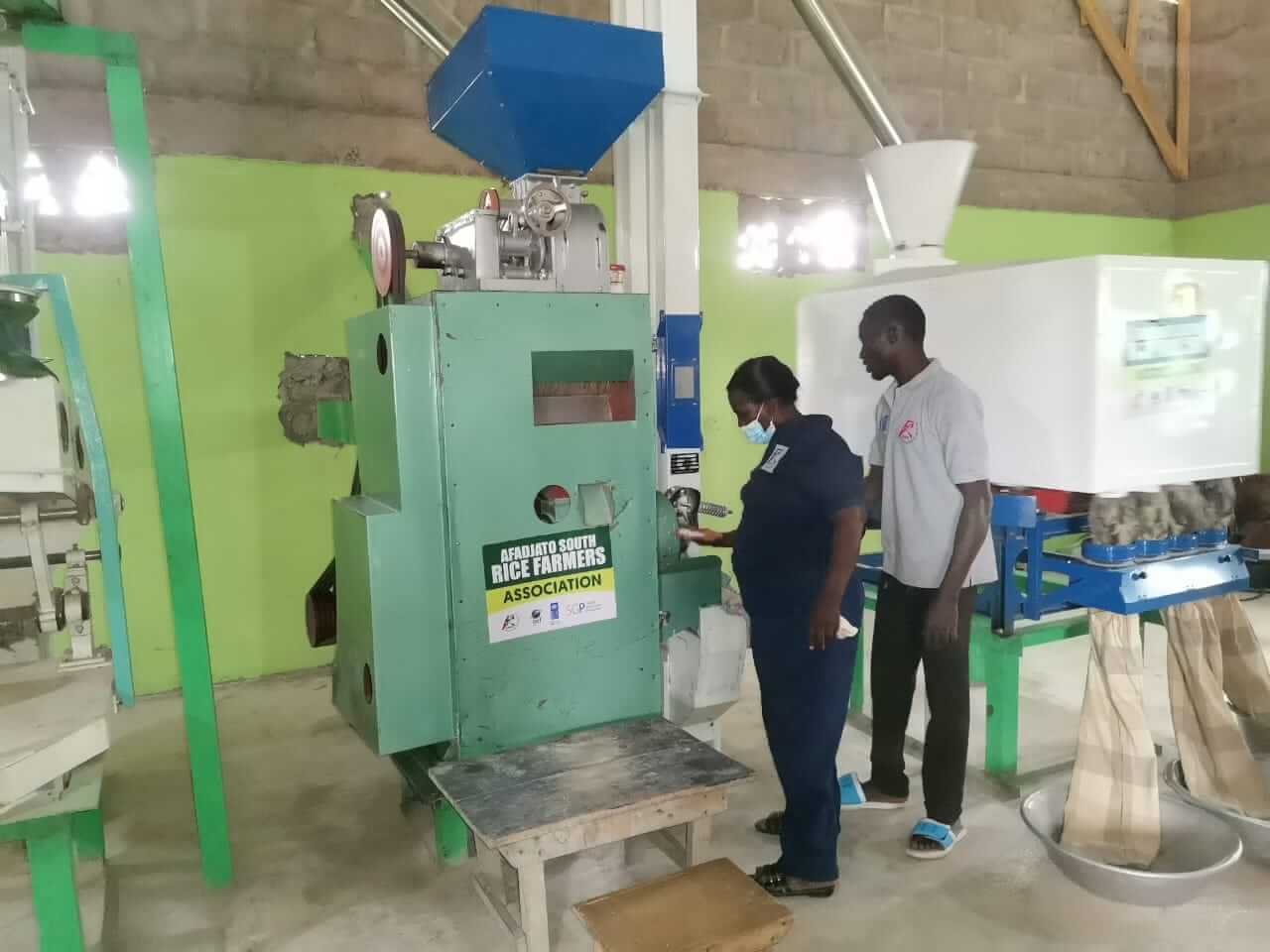
Despite this potential, the rice still faces challenges such as lack of certification, weak processing systems, and limited storage facilities. These issues reduce its competitiveness.
The project supported by the UNDP Global Environment Facility Small Grants Programme aimed to improve the production and marketing of organic indigenous rice in the Weto landscape in the Afadzato South District. It focused on increasing yields, improving storage, and introducing better farming practices to reduce post-harvest losses.
Project Objectives
The project had the following core objectives:
- Facilitate the purchase and use of a combined rice harvester to improve harvest efficiency.
- Establish rice purchasing agreements to provide financial support to farmers.
- Develop and implement marketing strategies to enhance the competitiveness of local rice.
- Work towards acquiring certification for Weto rice to meet national and international standards.
- Standardize local rice to improve product quality and marketability.
Key Achievements
Procurement of Equipment
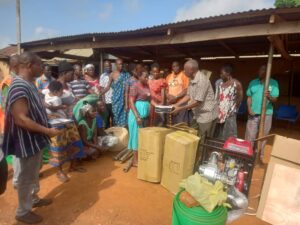
A combined rice harvester was successfully purchased and delivered to Golokwati in November 2020. This harvester significantly improved harvesting efficiency, reducing post-harvest losses. Additionally, two youth were also trained to operate the harvester. This helped ensure its proper use on local farms.
Rice Purchasing Agreements
A rice purchasing agreement was finalized with local farmer groups. It enabled farmers to sell their rice at market prices and provided free storage for any unsold rice, which helped reduce storage challenges.
Marketing Strategies and Standardization
A workshop on marketing strategies was held to enhance the competitiveness of Weto rice. It was agreed that packaging and branding are essential for attracting consumers. Efforts toward standardization are ongoing, with consultations underway to acquire certification for Weto rice from the Ghana Standards Authority and Food and Drugs Authority.
Community Engagement and Training
Community engagement activities were carried out in several communities, including Ve Agome, Deme, Kolenu, and Tafi Golokuati. A training session on rice value addition was held for women farmer groups. They received practical lessons on grading, packaging, and branding. The session supported farmers to improve product quality and explore new uses of rice, including rice flour.
Lessons Learned
Several key lessons emerged from this initiative:
- The combined rice harvester reduced harvesting time and losses. Breakdowns or limited access caused delays in harvesting and led to avoidable losses.
- Efforts to pursue certification revealed that farmers cannot meet quality requirements without consistent grading, drying, and packaging practices. Standardization must start at the community level before certification is possible.
- Training sessions in communities showed that farmers learn faster when demonstrations are done locally. Practical lessons on grading, packaging, and value addition helped women’s groups improve product quality and identify new income options, such as using rice flour.
Beneficiary Communities
The project benefitted several communities in the Weto landscape, including:
- Ve Agbome
- Ve Deme
- Ve Koloenu
- Ve Gbodome
- Ve Golokuati
- Ve Wudome
- Tafi Mador
- Tafi Agome
- Gbefi Tornu
- Gbefi Hoeme
- Leklebi Communities
- Gbi Godenu
- Avega